HomeTeam
Team
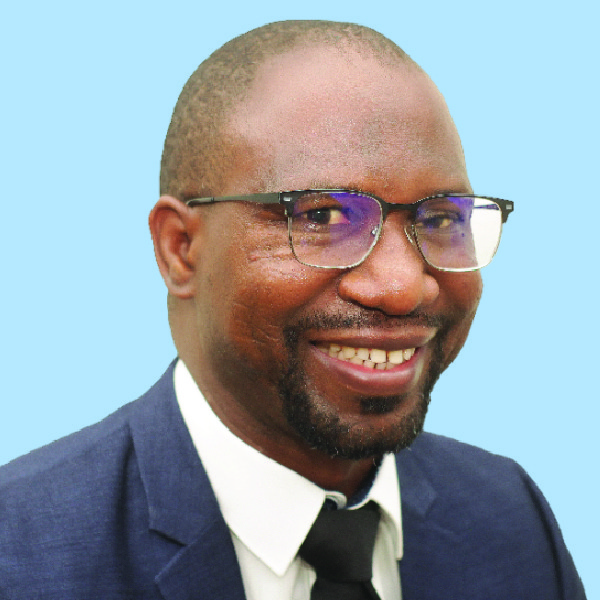
- Dr. Ghadafi Saibu
- President and CEO
- gsaibu@icapa-policy.org
About Dr. Ghadafi Saibu
Dr. Ghadafi Saibu is the President and CEO of the Institute of Comparative African Policy Analysis (ICAPA), and an Associate Researcher at the German Institute of Development and Sustainability (IDOS).
Dr. Saibu has over ten (10) years of experience working in the areas of research, policy analysis and advice. Prio to his role as the founding President and CEO of ICAPA, he worked as a full member with the research program “Transformation of Political (Dis)Order” at the German Institute of Development and Sustainability (IDOS). During this period, Dr. Saibu worked with an interdisciplinary team on the project “Regime Change and Social Cohesion in Africa” exploring the determinants and effects of social cohesion in Africa and providing policy advice to German and international policymakers on the practical implementation of research findings.
He has also previously worked as a Teaching and Research Assistant at the University of Ghana, and with CDD-Ghana as a researcher on UNDP, UNDEF and DFID funded projects, which includes among others, Transparency and Accountability (TAP) project; MPs/Citizens Accountability project stream of the African Power and Politics Program (APPP); The National Governance and Peace Tracking Poll (Gap Poll) (UNDP) project. He also worked in a collaborated project, Battling Electoral Misinformation on social media in Low Digital Literacy Environments with scholars from the University of Exeter and Warwick, funded by Global Challenges Research Fund (GCRF).
Dr. Saibu’s research interests include Regimes (Democratization/Autocratization), Social cohesion, Risks of Electoral violence & Civil war, Digital Technologies (AI, Social media mis(dis)information) & Competitive electoral mobilization. In his research, he employs nested mixed-methods comparative analyses, including the application of large-N statistical analyses, survey experiments, and qualitative methods. He has conducted research across African countries, and hold in-depth country expertise in Ghana, Nigeria and Zambia. His PhD topic was, Political Parties, Violent Youth and Electoral Insecurity, a cross-sectional analysis that comparatively examined variations in violent youth group actors and the intensity (levels and forms) of violence committed by the different categories of violent youth perpetrators in elections across African countries.
His publications and analysis have appeared in African Affairs, German Institute of Development and Sustainability (IDOS), African Newspage, Table. Media Africa (in German), and Frankfurter Rundschau (in German), The Conversation. Mail&Guardian, African Eye Report, Africa News, and Democracy in Africa, Institute for Democracy and Electoral Assistance (IDEA), Bloomsbury.
Dr. Saibu is an experienced leader with previous roles as the co-coordinator of the African Union Junior Research Fellows Work Group, BIGSAS, University of Bayreuth, Germany, President of the National Service Personnel Association, Ga-East Municipal Assembly, Greater Accra, Ghana, President of Information Studies Students’ Association, Department of Information Studies, University of Ghana, Public Relations Officer of Kiswahili Students’ Association, Department of Modern Languages, University of Ghana.
Dr. Saibu holds a PhD in Political Science from the University of Bayreuth, Germany, M.A. in Governance and Public Policy from the University of Passau, Germany, and B.A. in Information Studies with Linguistics, University of Ghana. He is a two-time recipient of the prestigious DAAD scholarship, having won the Helmut-Schmidt Public Policy and Good Governance Scholarship for his master’s program and the DAAD Doctoral Fellowship Award for his PhD program.